
Most people think shipping freight is just about moving goods from one place to another. But there’s more to it. Choosing the right shipping method can help you save time, money, and a lot of stress.
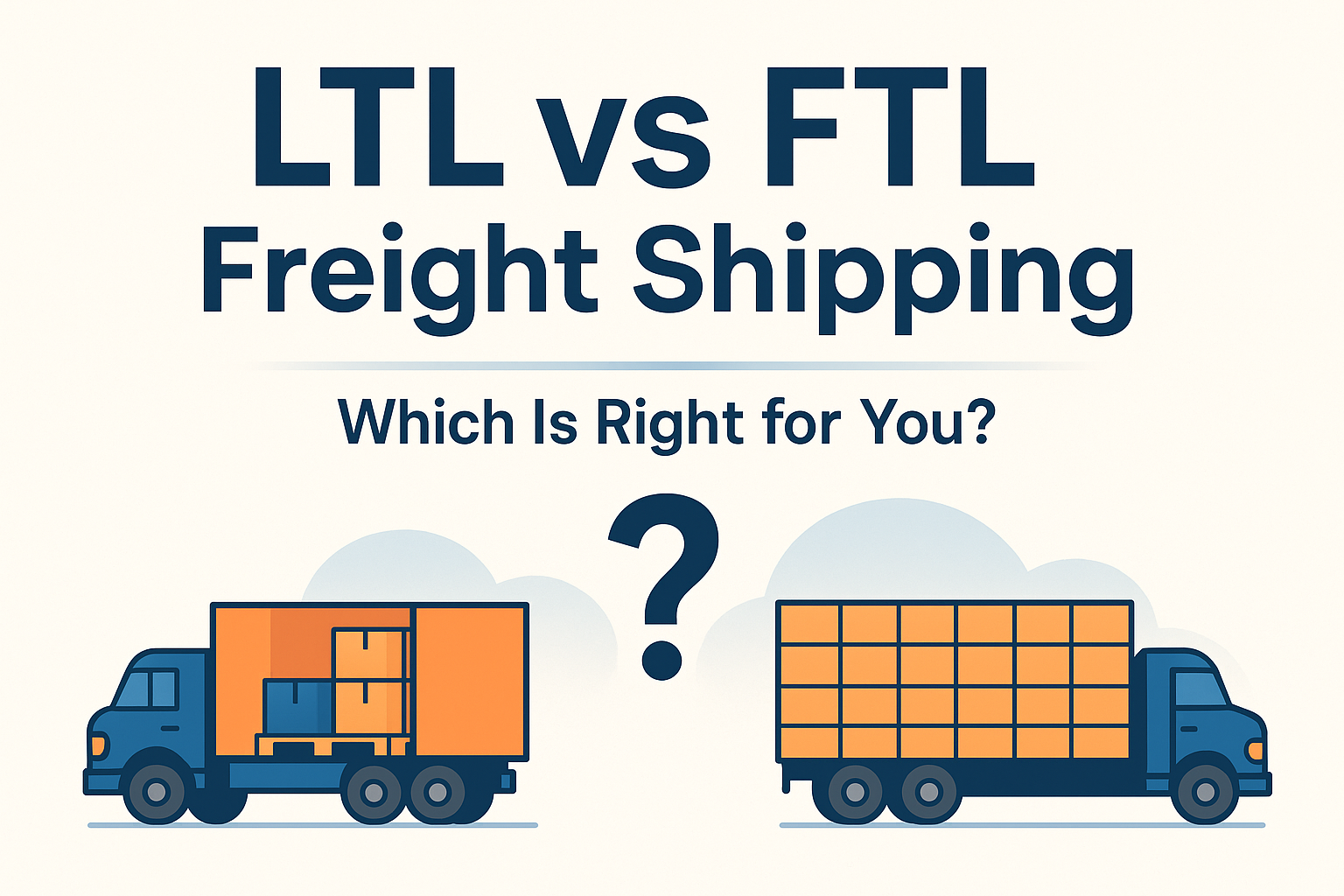
In logistics, you’ll often hear two terms: LTL (Less-than-Truckload) and FTL (Full Truckload). They might sound complicated, but the idea is really simple:
- LTL is like sharing a ride with others.
- FTL is like booking the whole vehicle just for yourself.
Both options are useful—the key is knowing which one fits your shipment best. Let’s break them down in easy words.
What Is LTL Freight Shipping?
LTL shipping is used when your shipment doesn’t take up the whole truck. Your freight shares space with goods from other businesses, and you only pay for the space you use — just like splitting a cab fare.
LTL works well when:
- Your shipment is small or medium-sized
- You’re looking to save on shipping costs
- Delivery time isn’t urgent
- You ship smaller loads often
Why many businesses choose LTL:
- Cheaper than booking an entire truck
- Great for frequent, small shipments
- Easy to book through logistics companies or freight brokers
Things to keep in mind:
- More stops mean longer delivery times
- More handling means fragile items need extra care or packaging
If saving money matters more than speed, LTL is a solid option.
What Is FTL Freight Shipping?
FTL shipping means you book the entire truck, even if it’s not completely full. Your freight goes straight from pickup to delivery without stopping for other shipments.
Choose FTL if:
- You have a large or full-truckload shipment
- Your freight is fragile, valuable, or time-sensitive
- You need fast, direct delivery
- You prefer little to no handling
Why many prefer FTL:
- Faster because it’s a direct trip
- Safer with fewer touchpoints
- Great for bulky shipments, machines, or urgent loads
Things to be aware of:
- Usually more expensive
- Not ideal for small shipments
When speed and safety matter more than cost, FTL is the better pick.
LTL vs FTL — Quick and Simple Guide
Choose LTL if:
- Your shipment doesn’t fill the whole truck
- You’re on a budget
- You don’t mind slower delivery
- You ship smaller loads frequently
Choose FTL if:
- You have enough goods to fill a truck
- You need fast, point-to-point delivery
- Your shipment is fragile or high-value
- You want fewer stops and less handling
A Simple Example
Let’s say you’re shipping 8 pallets and there’s no rush.
LTL makes perfect sense and will cost you less.
Now imagine you need to send 22 pallets of electronics that must arrive by tomorrow morning.
FTL is the safest and fastest option. No sharing. No delays.
The right choice depends on what your shipment needs at that moment.
So, Which One Should You Pick?
Ask yourself:
- How big is my shipment?
- Do I need fast delivery?
- Do I want to save money?
- Is the freight delicate or sensitive?
If cost matters more → Choose LTL.
If speed and protection matter more → Choose FTL.
Not sure? Many businesses work with logistics providers or freight brokers who help compare prices and find the best option.
Final Thoughts
There’s no “better” or “worse” option — just the right one for your situation.
- Smaller, flexible shipments? Go with LTL.
- Large, urgent, or fragile loads? Choose FTL.
Once you understand your shipment size, urgency, and budget, the choice becomes much easier. And with the right logistics partner, shipping becomes faster, smoother, and more efficient.